Picture desk
What a picture desk actually does on deadline
Everyone knows that picture editors choose the pictures. Almost nobody outside one knows that choosing is the smallest part of the job, and the part least likely to cause trouble.
Written and checked by the Picdar editorial desk
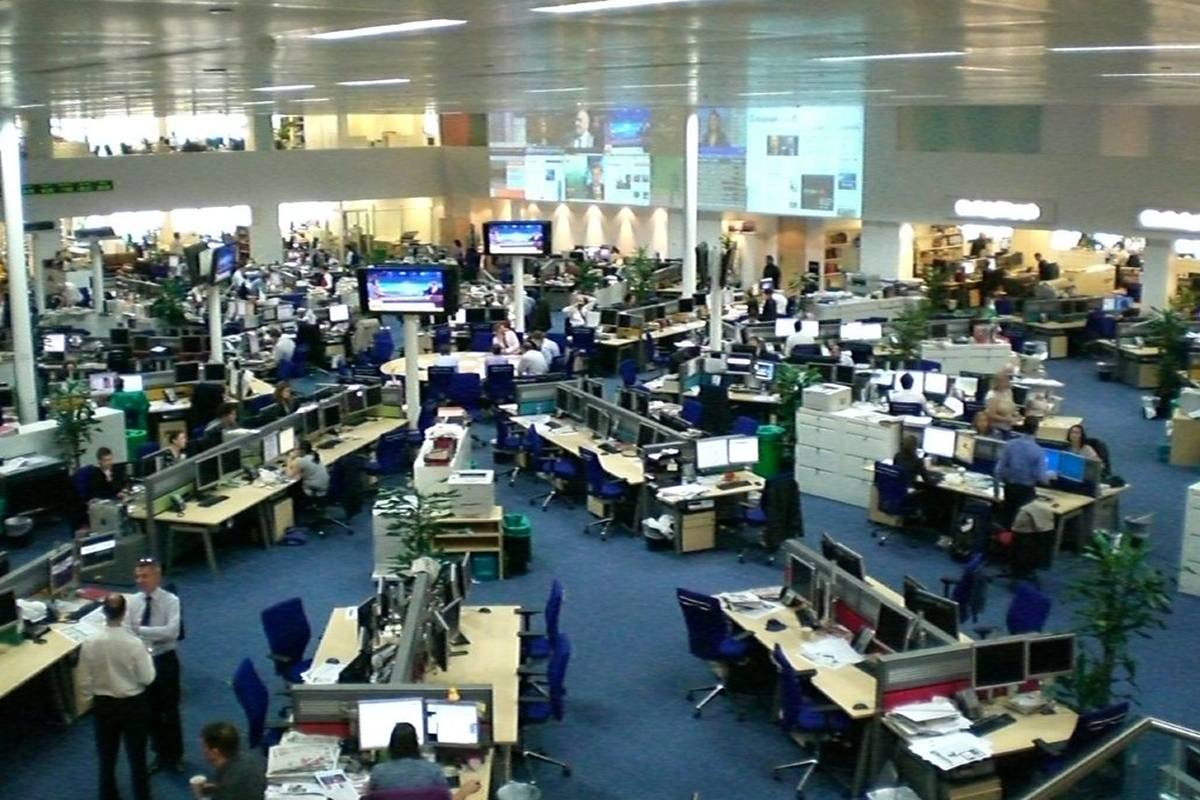
A picture desk on deadline is running three things at once: an intake of frames that keeps arriving, a set of legal and factual checks that cannot be skipped, and a layout whose shape is still changing. The work is triage, not curation.
The intake
Frames arrive from staff photographers, from agency feeds, from readers, from press offices, and from the reporter's phone. They arrive with wildly different metadata: a staff file carries a full capture record, a press office file carries a marketing filename and nothing else, a reader's file has had its metadata stripped by whatever app forwarded it.
The first decision on every file is not "is this good" but "do we know where this came from". A frame with no provenance is not a candidate; it is a research task. On deadline there is rarely time for the research task, which is why the desk that logs provenance at ingest is the desk that still has options at half past nine.
Ingest also means one copy in one place. A picture that exists as four downloads in four inboxes will be cropped four different ways, and the version that reaches the page will not be the version that was checked.
The checks that cannot move
Three checks sit between a promising frame and a published one, and none of them can be deferred to after the edition closes.
Rights. What are we licensed to do with this frame, on which platforms, for how long? An image cleared for the print edition and used on the site is an unlicensed use, and the invoice arrives months later. An editorial-only frame next to a commercial promotion is the same problem wearing a different hat.
Identification. Do we know who is in the picture, and is every name in the caption from a record rather than a resemblance? This is where the desk's reporting instinct matters more than its eye.
Integrity. Has the frame been altered, and by whom? A file that has passed through a press office, a wire, and a freelancer's export may have been toned three times. The desk needs to know whether anything was added or removed, and a desk that cannot answer that should not run the frame as news.
These three are the reason the job exists at all. A layout can be produced without one. A defensible edition cannot.
Cropping as an editorial act
The crop is where the desk's judgement is most visible and least examined. Trimming a frame changes what the reader is told. Cutting a bystander out of a protest photograph changes the apparent size of the protest. Tightening onto a face removes the setting that explained the expression.
The working rule is that a crop may remove what is irrelevant and may not remove what is informative. That sounds obvious and is genuinely hard, because on deadline the pressure runs the other way: the tighter crop nearly always looks better at the size the page allows.
Where the crop changes the reading of the scene, the desk either keeps the wider frame or publishes both. Where it does not, the tight crop is the better picture and should be used without apology.
Sizing against the real page
A photograph has to survive at every size it will be seen. The same frame becomes a lead image at full width, a card on a section page, a thumbnail in a feed, and — if the piece syndicates — a crop at somebody else's aspect ratio.
The test is whether the subject is still legible at the smallest of those. A wide establishing shot that reads beautifully at full width is a grey smudge at card size. A portrait works at every size and carries less information. Choosing between them is a real trade, and the desk that makes it consciously ends up with a better-looking section page than the desk that discovers the problem at the thumbnail stage.
Aspect ratios are worth deciding once. A library where every frame carries a designated focal point crops predictably everywhere. A library where cropping happens per placement produces the decapitations that readers notice and nobody owns.
Where the time actually goes
On a normal evening the desk spends very little time looking at pictures. It spends its time chasing a credit line, establishing whether a handout may be used, matching a name to a face, re-toning a frame that arrived flat, and re-cutting a lead because the headline grew by two words.
That is why the preparation done off deadline matters so much more than the judgement exercised on it. A library with consistent keywords produces candidates in seconds. A library without them produces a search that returns four hundred files and a picture editor scrolling.
We treat every deadline as a test of the filing done weeks earlier. When the evening goes badly, the cause is almost never the choice of frame.
Conclusion
The desk's real product is not a selection. It is a set of assurances: that the frame is what it appears to be, that we are entitled to publish it, that the people in it are correctly named, and that the crop tells the truth at every size the reader will meet it. Those assurances are produced by process, not by taste, and they are what separates a picture desk from a folder of images.